Visceral Fat: Why It Is Dangerous and What Actually Removes It
How visceral fat differs from subcutaneous fat, why it carries more risk, how to assess it without an MRI, and which changes to diet and training genuinely shrink your waist.
Contents
Belly fat is discussed mainly as a cosmetic problem, which badly understates the stakes. Two fundamentally different depots sit inside the abdomen: the subcutaneous one you can pinch, and the visceral one wrapped around your internal organs that you cannot. It is the second that tracks with diabetes, hypertension and cardiovascular events, and the second that neither your mirror nor your scale can see.
Two different fats
Adipose tissue is not a passive warehouse but an endocrine organ. It secretes leptin, adiponectin, interleukin-6, TNF-alpha and dozens of other signalling molecules — and it does so differently depending on where it sits.
Subcutaneous fat lies under the skin on hips, buttocks and abdomen. It is relatively inert, serves a storage role in women, and in its gluteofemoral form is even associated with somewhat better metabolic markers.
Visceral fat surrounds the liver, intestines and other abdominal organs. It carries a higher density of catecholamine and glucocorticoid receptors, a higher rate of lipolysis and greater secretion of pro-inflammatory cytokines. Most importantly, its venous drainage runs through the portal vein — straight into the liver.
A third depot gets less airtime: ectopic fat, stored inside the liver, pancreas, muscle and around the heart. It travels with visceral fat and adds its own contribution — fatty liver is a risk factor for type 2 diabetes independently of body weight.
Assessing it without a scanner
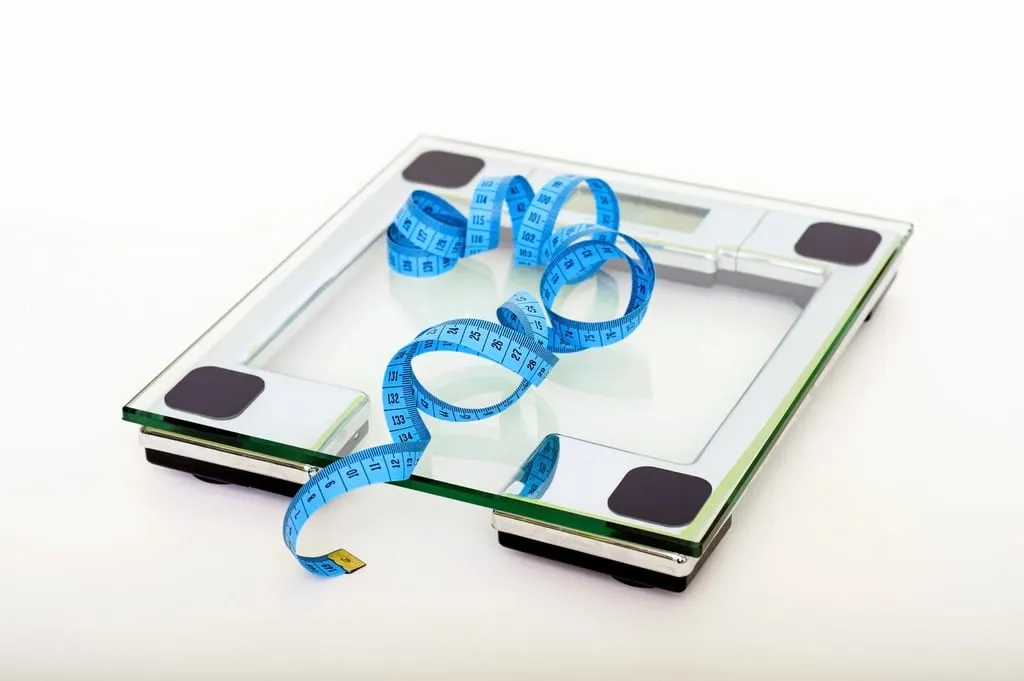
The gold standard is MRI or CT at the L4–L5 level. In real life a tape measure suffices.
| Measure | Healthy | Increased risk | High risk |
|---|---|---|---|
| Waist, men | < 94 cm | 94–102 cm | > 102 cm |
| Waist, women | < 80 cm | 80–88 cm | > 88 cm |
| Waist to height | 0.40–0.49 | 0.50–0.59 | ≥ 0.60 |
| Waist to hip, men | < 0.90 | 0.90–0.95 | > 0.95 |
| Waist to hip, women | < 0.85 | 0.85–0.90 | > 0.90 |
Waist-to-height is convenient because it needs no lookup table: keep your waist under half your height. In meta-analyses it predicts cardiometabolic risk better than BMI and better than absolute waist circumference alone, and since 2022 it has appeared in NICE guidance.
Bioimpedance scales that report a "visceral fat level" from 1 to 59 deserve a separate note. The method estimates body composition from electrical resistance and depends heavily on hydration; the visceral component within it is calculated rather than measured. Useful for tracking a trend, not for drawing conclusions.
Sex
For people of South and East Asian descent overweight starts at a BMI of 23: at the same index, body fat and diabetes risk run higher.
Circumferences — optional, but they decide the verdict
Measure in the morning, before eating, with the tape snug but not tight. Waist at the navel, hips at the widest point, neck just below the larynx.
Body mass index
Healthy range for your height: 56.7–76.6 kg. That is 1.4 kg above the upper limit
Body fat from circumferences
Add your neck and waist (and hips, for women) to estimate body fat with the US Navy method.
📋 Bottom line
Some measures are outside the healthy range. Not a diagnosis, but a reason to check blood pressure, glucose and a lipid panel at your next check-up.
BMI is a population statistic. It overstates risk in muscular people and understates it in older, sedentary ones: same mass, less muscle. None of these indices diagnose anything or replace an examination.
Читайте также: BMI and Body Composition: What the Index Shows and What It Misses
What actually works
The good news: visceral fat leaves first. It is metabolically more active than subcutaneous fat and mobilises more readily, so a 5–10% reduction in body weight shrinks the visceral depot disproportionately — by 20–30%.
| Measure | Effect on visceral fat | Notes |
|---|---|---|
| Calorie deficit of 300–500 kcal | Strong | The primary tool; visceral fat goes first |
| Aerobic work, 150–300 min/week | Moderate to strong | Effective even at unchanged body weight |
| Resistance training | Moderate | Plus muscle preservation in a deficit |
| Cutting sweetened drinks | Moderate to strong | Liquid fructose deposits viscerally |
| Reducing alcohol | Moderate | Ethanol is metabolised in the liver, like fructose |
| Sleeping 7–9 hours | Moderate | Short sleep raises appetite and cortisol |
| More fibre | Small but consistent | Soluble in particular: oats, pulses, vegetables |
| Fat burners, targeted exercises | None | Crunches do not spend the fat above the muscle |
Aerobic training deserves elaboration. In the Verheggen meta-analysis, exercise without dietary restriction reduced visceral fat markedly more than the weight loss could explain: participants lost a kilogram or so while their visceral depot shrank by 6–7%. The practical reading matters — even when the scale refuses to move, regular cardio is doing real work.
The second thread is sweetened drinks. In a controlled trial by Stanhope and colleagues, participants spent ten weeks consuming identical calorie loads from beverages sweetened with either glucose or fructose. Body weight rose equally; visceral fat rose only in the fructose group. Fructose is metabolised predominantly in the liver, and that sets it apart from glucose. Exactly the same argument applies to alcohol.
Читайте также: How Much Sugar Per Day and Where It Hides
What does not work
Targeted exercises. The idea that crunches burn belly fat is intuitive and wrong. Lipolysis is a systemic, hormonally regulated process; a muscle cannot claim the fat lying over it. Direct experiments with one-sided training confirm it: the working limb does not lose fat faster than the other.
Belts, wraps and sauna suits. Water leaves and returns within a day.
Supplements. L-carnitine, green tea, CLA, garcinia, raspberry ketones — none of these categories has shown a clinically meaningful effect on the visceral depot. Reported effects are typically fractions of a kilogram and fail to replicate.
Fasting as such. Intermittent fasting works precisely to the extent that it creates a calorie deficit; at matched deficits it offers no specific advantage for visceral fat.
Читайте также: Intermittent Fasting: What the Research Actually Shows
On stress and sleep
The link between stress and belly fat is real but more complicated than the popular version. Chronically elevated cortisol does favour visceral deposition: visceral tissue carries a higher density of glucocorticoid receptors and greater activity of 11β-HSD1, the enzyme that converts inactive cortisone into cortisol inside the fat tissue itself. Cushing's syndrome, with its characteristic fat redistribution, is the textbook illustration.
But in someone without endocrine pathology, cortisol contributes less than behaviour does. Short sleep and chronic stress raise appetite, shift food choices towards calorie-dense options and reduce spontaneous movement. They work mainly through calorie balance — which is exactly why sleep sits on the list of effective measures alongside diet.
Читайте также: How to Manage Stress: Techniques With Evidence Behind Them
What to do, step by step
Measure your waist in the morning before eating, tape at navel level, without pulling your stomach in. Divide by your height in centimetres. Under 0.5 means the task is simply keeping it that way.
Above it, start with the two changes that return the most per unit of effort: remove calories from drinks (sweetened and alcoholic) and add 150–300 minutes of aerobic activity a week. Then a moderate calorie deficit of 300–500 kcal, no more — rapid weight loss costs muscle.
Remeasure monthly under the same conditions. Three to five centimetres over three months is a good rate. If your waist is shrinking while the scale holds still, everything is going right: your body composition is changing, which is precisely the point.
Читайте также: Calorie Deficit: How to Calculate It Without Harming Yourself
The bottom line
Visceral fat is not a cosmetic defect but metabolically active tissue that drains fatty acids and inflammatory molecules straight into the liver. It underpins the chain of insulin resistance, high triglycerides, low HDL and hypertension known as metabolic syndrome.
A tape measure assesses it: keep your waist under half your height. You cannot remove it locally, but it is the first to go in a general deficit, and regular cardio shrinks it even at unchanged body weight. Nothing sold as a fat burner appears anywhere on that list.
FAQ
How does visceral fat differ from subcutaneous fat?+
In location and behaviour. Subcutaneous fat sits under the skin and is relatively inert. Visceral fat wraps the abdominal organs, is metabolically active, and dumps free fatty acids and inflammatory molecules straight into the portal vein — that is, directly into the liver. Hence its association with insulin resistance and dyslipidaemia.
How can I tell how much visceral fat I have without an MRI?+
From your waist and its ratio to your height. A waist above 94 cm in men or 80 cm in women indicates raised risk; above 102 and 88 indicates high risk. The universal rule: keep your waist under half your height. MRI and CT are the precise methods, but a tape measure is enough to act on.
Can I target belly fat specifically?+
Not locally, no. Crunches and planks strengthen abdominal muscles without spending the fat that lies over them. The good news is different: visceral fat leaves first during general weight loss, because it is metabolically more active than subcutaneous fat. So you cannot spot-reduce, yet the belly genuinely shrinks ahead of everything else.
What reduces visceral fat fastest?+
An overall calorie deficit plus regular aerobic activity. In trials, 150–300 minutes of aerobic work a week reduces visceral fat even when body weight barely moves. Separately, cut sweetened drinks and alcohol: liquid fructose and ethanol are metabolised in the liver and deposit visceral fat particularly readily.
Does stress really put fat on your belly?+
There is a link, though weaker than popular articles suggest. Chronically elevated cortisol does favour visceral deposition — visceral tissue carries more glucocorticoid receptors. But most of the effect of stress is indirect: it degrades sleep and shifts eating behaviour, which then acts directly on calorie balance.
Do fat burner supplements work on belly fat?+
No. Neither L-carnitine, green tea, CLA nor any other 'fat burner' produces clinically meaningful reductions in visceral fat. The only drugs with a demonstrated effect are GLP-1 agonists and their relatives, and those are prescription medicines with indications, side effects and medical supervision.
Can you have dangerous visceral fat at a normal weight?+
Yes, and it is a recognised clinical picture — metabolically obese normal weight. BMI 23, waist 95 cm, insulin resistance and high triglycerides. This is exactly why measuring your waist is worthwhile even when the scale number satisfies you.
References
- 1.Neeland IJ, et al. Visceral and ectopic fat, atherosclerosis, and cardiometabolic disease: a position statement. Lancet Diabetes Endocrinol, 2019
- 2.Tchernof A, Després JP. Pathophysiology of human visceral obesity: an update. Physiol Rev, 2013
- 3.Ashwell M, Gunn P, Gibson S. Waist-to-height ratio is a better screening tool than waist circumference and BMI. Obes Rev, 2012
- 4.Verheggen RJHM, et al. A systematic review and meta-analysis on the effects of exercise training versus hypocaloric diet on visceral adipose tissue. Obes Rev, 2016
- 5.Stanhope KL, et al. Consuming fructose-sweetened, not glucose-sweetened, beverages increases visceral adiposity. J Clin Invest, 2009
- 6.Ruderman N, et al. The metabolically obese, normal-weight individual revisited. Diabetes, 1998
Read next
Safe Weight Loss Rate: How Many Kg a Week Is Normal
What rate of weight loss counts as safe, why faster is not better, how to preserve muscle while losing fat, and when a slowdown on the scale is normal.

BMI and Body Composition: Why the Scale Lies
Where BMI came from, when it works and when it fails, why waist-to-height ratio beats it, and how to read your body composition without expensive equipment.
Frequent Colds in Adults: When It Is Normal and When It Is Not
How many colds a year is normal, why a weak immune system is rarely the answer, which warning signs need investigation, and what genuinely reduces how often you get ill.

PCOS: Signs, Diagnosis and What Actually Helps
How polycystic ovary syndrome is diagnosed, why it has nothing to do with cysts, where insulin resistance fits in, and which treatments have real evidence behind them.

Is Breakfast Really the Most Important Meal?
Randomised trials do not support the idea that breakfast helps you lose weight or speeds up metabolism. Who genuinely needs it, and what to put on the plate.
Ultra-Processed Foods: What They Are and Why They Matter
What ultra-processed foods are under the NOVA system, how UPF differs from merely processed food, what the NIH trial showed, and how to spot UPF on the label.